There’s a particular kind of pain that defies easy description. Not the sharp sting of a cut or the dull ache of a bruise, but the hollow, gnawing distress that floods your chest when you’re separated from someone you love.
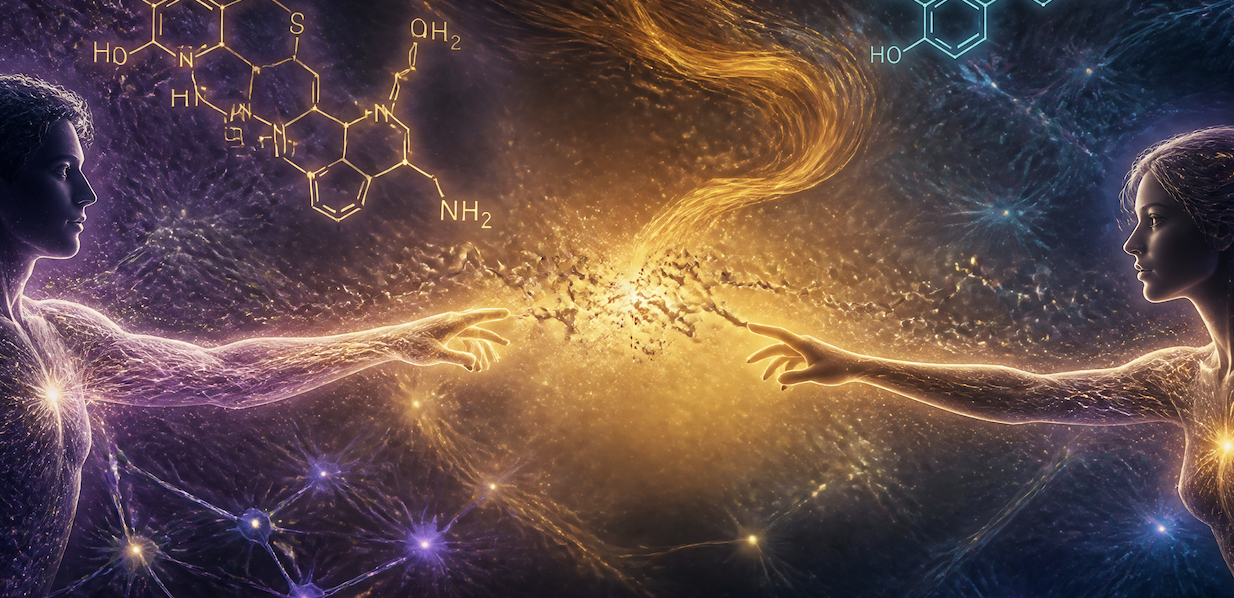
Whether it’s your child’s first day of school, a partner traveling for work, or the end of a relationship—this pain is real, visceral, and rooted deep in your mammalian brain.
In my practice, I see people struggling with attachment in its many forms. Some cling desperately to relationships, unable to tolerate even brief separations, their anxiety spiking at every unanswered text. Others keep everyone at arm’s length, convinced that independence is safety, that needing no one means never getting hurt. And then there are those caught somewhere in the middle, oscillating between desperate need and protective distance, never quite finding solid ground.
What all these patterns share is a neurobiological foundation that Jaak Panksepp spent decades mapping—one that runs on the same chemistry as morphine, heroin, and every opioid that has ever soothed human pain.
The Opioid System: Your Brain’s Built-In Comfort
In 1978, Panksepp and his colleagues at Bowling Green State University made a remarkable discovery. They found that low doses of morphine could profoundly reduce distress vocalizations in puppies separated from their mothers. The crying stopped. The agitation calmed. The desperate searching behavior diminished.
This wasn’t just interesting—it was revelatory. Panksepp had noticed something others missed: the similarities between opioid withdrawal in drug addicts and the distress caused by broken relationships. He’d also observed that opioid addicts frequently came from unstable family backgrounds. The connection seemed clear: the brain’s endogenous opioid system—the same system activated by morphine and heroin—plays a fundamental role in social bonding and attachment.
By 1980, Panksepp published his “opioid hypothesis”: brain opioids likely underlie the formation of social attachments and modulate social emotions and behaviors. What he discovered was one of seven primary emotional systems he would eventually map—the PANIC/GRIEF system, also known as separation distress.
Here’s how it works: When you’re close to someone you’re attached to, your brain releases endogenous opioids—enkephalins and endorphins. These natural opiates create a feeling of warmth, safety, and contentment. You feel good. You feel secure. The world seems manageable.
But when that attachment figure is absent—when the bond is broken or threatened—your opioid levels drop. Suddenly, you’re in a low-opioid state. And just like someone withdrawing from heroin, you experience distress. Not metaphorical distress. Actual, physical, neurochemical distress.
As Panksepp noted in his research on affective neuroscience, “Human sadness and depression are low opioid states.” The PANIC/GRIEF system generates the painful feelings of separation anxiety, loneliness, and that particular quality of suffering we call heartbreak.
This is why separation from loved ones literally hurts. It’s not weakness. It’s not neediness. It’s your PANIC system detecting a threat to your social bonds and flooding you with distress to motivate you to restore contact. For a mammal, especially a young one, separation from caregivers meant death. This system evolved to keep us close to those who protect us.
Why Some People Need Too Much (And Others Need Too Little)
Now we arrive at the puzzle that brings people to therapy: Why do some individuals become overly dependent on others while others avoid attachment entirely?
Recent neuroscience research has revealed something stunning. A 2015 study by Nummenmaa and colleagues used PET scans to measure mu-opioid receptor (MOR) availability in the brains of adults with different attachment styles. They found that people with avoidant attachment—those who feel uncomfortable depending on others and keep emotional distance—had significantly lower MOR availability in key brain regions including the thalamus, anterior cingulate cortex, frontal cortex, amygdala, and insula.
Think about what this means. If you have fewer available opioid receptors, the calming, reward effects of social connection are literally dampened. Closeness doesn’t feel as good to you as it does to someone with higher MOR availability. The neurochemical payoff for attachment is reduced.
And here’s where it gets really interesting: Another study found that heroin abuse (but not ecstasy or cannabis) was predominantly associated with fearful-avoidant attachment patterns. People with this attachment style simultaneously desire close connection and fear dependence on others. They approach, then withdraw. They want intimacy but panic when they get it.
Could some people be unconsciously self-medicating? Using external opioids to replace the internal opioids their brains don’t produce sufficiently during social connection?
On the other end of the spectrum, anxious attachment—the pattern of worrying constantly about partners breaking the bond, needing excessive reassurance, struggling with separations—appears to involve a hyperactive PANIC system. These individuals aren’t deficient in opioid receptors; instead, their separation distress system is easily triggered and difficult to soothe.
Esther Perel and the Paradox of Intimacy
Esther Perel’s work on attachment and intimacy adds another crucial layer to this understanding. In her book “Mating in Captivity,” Perel explores a paradox that confounds many couples: the very closeness that creates security can diminish desire and erotic energy.
Perel observes that “for some of us, love and desire are inseparable, but for many more, emotional intimacy inhibits erotic expression.” She’s not talking about everyone—she’s careful to note this applies to certain individuals. But for those it does apply to, it creates a painful bind.
What Perel describes neurobiologically might be the conflict between different attachment needs. Maximum security comes from complete fusion, total transparency, merged lives. But maximum aliveness—that sense of vitality, novelty, and self-expression—requires separateness, mystery, and autonomy.
Avoidant individuals, Perel suggests, often lose attraction as intimacy increases. They need distance to maintain desire. The closer someone gets, the more they want to pull away—not because they don’t care, but because their nervous system is wired differently. When attachment triggers feel overwhelming (perhaps due to that lower opioid receptor availability), creating space becomes a survival strategy.
As Perel writes in “Mating in Captivity”: “Being with an unavailable partner provides a protective limit. If you can’t get too close to a person, you need not fear entrapment or loss of self.”
This isn’t just psychology—it’s neurobiology. Some brains simply don’t find fusion rewarding. The opioid payoff isn’t sufficient to overcome the perceived threat of losing autonomy.
Conversely, anxiously attached individuals might seek constant closeness precisely because separation triggers their PANIC system so readily. They’re not being “clingy” out of weakness—their brains are genuinely distressed when the attachment bond feels uncertain. They need more reassurance because their separation distress system is more sensitive.
Perel is also careful to note another group: people who don’t seek passion at all, “but rather prefer calmer waters and a love that is built on patience.” Not everyone needs the same neurochemical cocktail from relationships. What looks like avoidance might be a genuine preference for a different kind of connection.
The Cost of Avoiding Vulnerability
But here’s what I’ve observed in my practice: regardless of attachment style, those who avoid deeper connection and vulnerability—who wall themselves off from genuine intimacy—inevitably pay a price.
Perel notes that while “too much communication, openness, and vulnerability can strain the relationship,” there’s a crucial difference between healthy boundaries and defensive avoidance. When someone refuses all vulnerability—when they keep everyone at a distance because they’re terrified of dependence or loss—they’re not protecting themselves. They’re starving themselves.
Remember: attachment isn’t optional for mammals. The PANIC/GRIEF system exists because social bonds were literally survival. A completely isolated mammal is a dead mammal. We evolved to need each other.
When you avoid attachment, you’re operating in a perpetual low-opioid state. You might avoid the acute pain of separation, but you also forfeit the warmth of connection. You might escape heartbreak, but you also miss out on the neurochemical reward of love—those endogenous opioids that make life feel manageable, safe, and sweet.
The people I see who’ve spent years avoiding deep connection often describe a particular kind of suffering: not the sharp pain of loss, but a chronic emptiness. A flatness. A sense of going through the motions without really feeling alive. They’ve protected themselves from everything, including joy.
As Perel observes, genuine erotic intimacy requires vulnerability. It requires the willingness to be seen, to lose control, to risk rejection. “There is no such thing as safe sex,” she writes—meaning that real connection always involves risk. Always makes you vulnerable. Always opens you to potential pain.
But the alternative—a life of perfect safety achieved through emotional isolation—is its own kind of death. It’s a shallow existence, one where you might avoid drowning but you never really swim.
The Paradox We’re Stuck With
So here we are, caught in yet another impossible bind. Our brains run on opioids when we’re connected. Separation triggers withdrawal-like distress. Some of us have fewer opioid receptors, making attachment less rewarding. Some of us have hair-trigger PANIC systems, making separation unbearable. And all of us have to navigate the competing needs for fusion and autonomy, security and aliveness, connection and independence.
There’s no perfect solution. People with avoidant attachment can’t just decide to have more opioid receptors. People with anxious attachment can’t simply turn down their PANIC system. And everyone has to find some way to tolerate the vulnerability that genuine connection requires.
But here’s what helps: understanding that these patterns aren’t personal failures. They’re neurobiological realities shaped by genetics, early experiences, and the particular way your brain is wired.
If you’re avoidant, knowing that closeness doesn’t neurochemically reward you the same way it rewards others can ease the shame. You’re not broken or cold—your brain simply has a different baseline. The work, then, isn’t forcing yourself into fusion you can’t tolerate, but finding the level of connection that works for your neurobiology while still allowing genuine intimacy.
If you’re anxious, understanding that your PANIC system is genuinely more sensitive can help you distinguish between real threats to the attachment bond and false alarms. Your distress is real—but it’s not always accurate. Learning to soothe your separation distress without demanding constant reassurance from others becomes the work.
And for everyone: recognizing that vulnerability is terrifying precisely because it’s necessary. That the risk of heartbreak is the price of the opioid high that comes from genuine connection. That avoiding all attachment to avoid all pain leaves you chronically opioid-depleted—safe, perhaps, but perpetually empty.
Perel reminds us that in healthy relationships, “we know our beloved will be waiting for our return, will not punish our selfish pursuits and may even applaud them.” This is the paradox of secure attachment: it’s secure enough that you can venture away, explore your own autonomy, risk your own separateness—because you trust the bond will hold.
But you can’t get there without vulnerability. You can’t create that secure base without letting someone matter. And letting someone matter means accepting that your brain will reward you with opioids when they’re close and punish you with withdrawal when they’re gone.
This is the chemistry of connection. It’s not metaphor. It’s measurable, observable, real. And understanding it won’t make attachment any less terrifying or any less necessary. But it might make it a little more bearable.
Because at the end of the day, you’re not weak for needing people. You’re a mammal. And mammals have PANIC systems that scream when the bonds that keep us alive are threatened. The question isn’t whether to need anyone—evolution settled that millions of years ago. The question is how to need people without losing yourself, how to connect deeply without being consumed, how to be vulnerable without being destroyed.
There’s no formula for that. Just the daily practice of noticing which system is currently activated, which neurochemical state you’re in, and making conscious choices about whether to move toward connection or create space—not out of fear, but out of genuine awareness of what you need.
The chemistry of connection is both our blessing and our curse. We’re wired for attachment. Which means we’re wired for pain when attachments break. But also wired for the profound reward—that opioid warmth—when we’re held, seen, and loved.
And shallow as it might be to avoid that pain through isolation, the real tragedy would be never knowing that warmth at all.
Do you want to chat about this article? Leave a comment below or send me an email with your thoughts and don’t forget to like us on Facebook.