12 min read
We are our own worst masters.
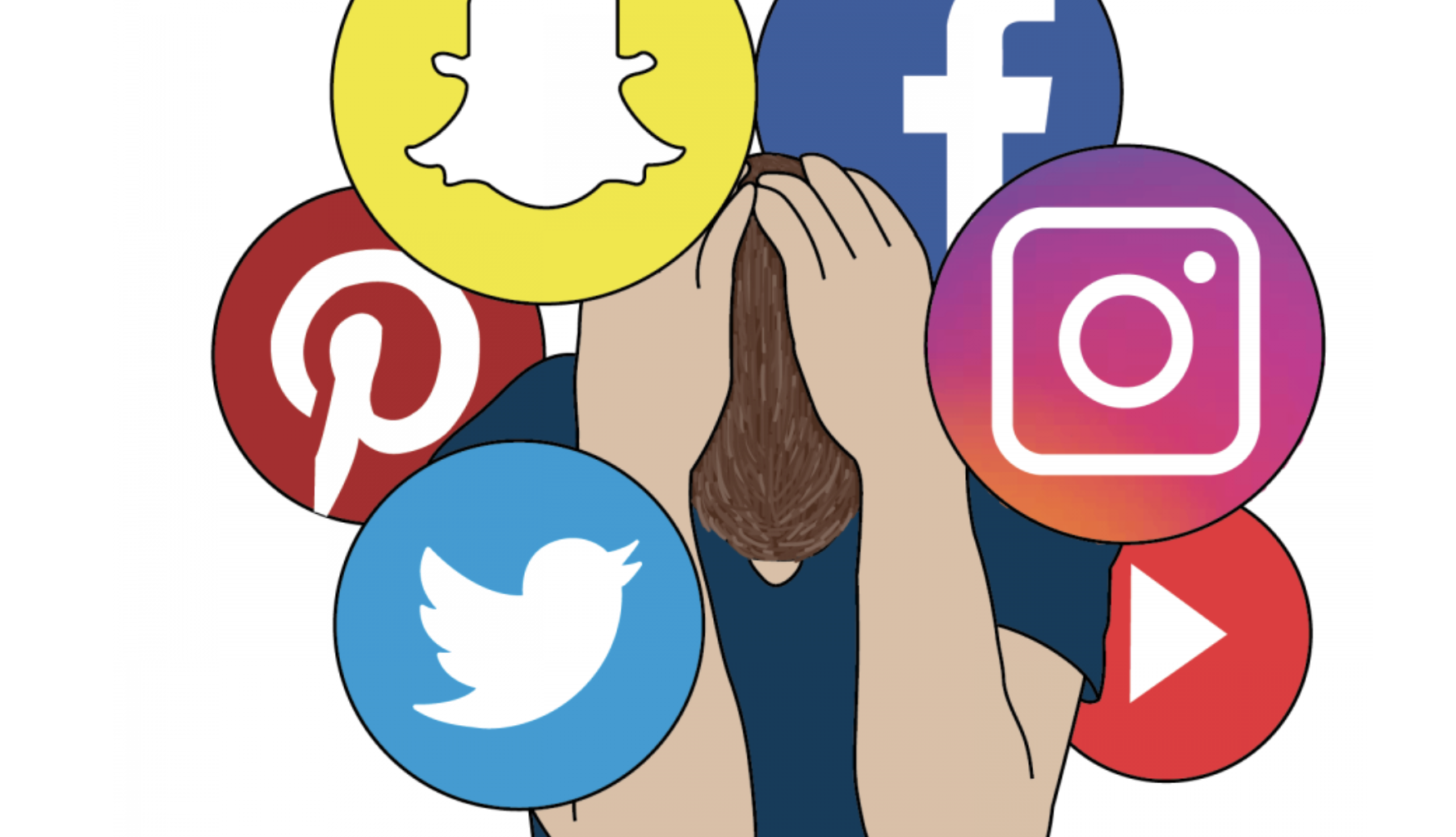 This is the uncomfortable truth that haunts our age of endless optimization, relentless self-improvement, and the incessant pursuit of productivity.
When I first encountered Byung-Chul Han’s “The Burnout Society,” I felt a recognition so profound it was almost painful—as if someone had finally articulated the invisible cage we’ve collectively built around ourselves.
Han’s diagnosis is simple yet devastating: we no longer live in a disciplinary society, one governed by external prohibitions and constraints. Instead, we inhabit what he calls the achievement society, where the command is not “You must not” but rather “You can.” This shift from the negative to the positive, from prohibition to possibility, sounds liberating on the surface. After all, who doesn’t want freedom, potential, unlimited choices? Yet this very freedom has become our new prison, and we are both the inmates and the wardens.
The era of instant gratification has morphed into an era of instant exhaustion. Sitting in my practice, I listen to people describe a peculiar form of suffering—one that doesn’t come from external oppression but from an internal compulsion to achieve, to optimize, to become the best version of themselves. They are not broken by prohibitions but by permissions. The freedom to be anything has paradoxically enslaved them to the pursuit of everything.
The Big Other Is Dead, Long Live the Big Other
The psychoanalyst Jacques Lacan gave us the concept of the “big Other”—the symbolic order, the gaze under which we perform our social roles, the imagined authority that judges our worth. In traditional disciplinary societies, this Other was externalized: God, the Father, the State, the Boss. These were concrete figures of authority against which we could rebel, resist, or at least identify as obstacles to our desires.
But what happens when the big Other dissolves? What happens when, as the contemporary philosopher Slavoj Žižek might observe, the superego command shifts from “You must obey!” to “You must enjoy!”? We internalize the gaze. We become our own surveillance system. The achievement society doesn’t need external guards because we police ourselves far more ruthlessly than any overseer ever could.
He gives a simple example: the disciplinary father might state “you age going to your grandma today or no TV for a week”, while the “positive” father might try to convince you with arguments about how much she loves you and how she won’t be around for long. But these arguments inevitably lead you to believe that if you don’t desire to visit grandma today and you’d rather play video games, this must mean that you don’t love your family enough, therefore you must be a bad person.
This is the perverse genius of contemporary capitalism—it has convinced us that our own self-exploitation is freedom. We willingly work ourselves to the bone, not because a boss demands it, but because we’ve internalized the imperative to maximize our potential. We’ve become what Han calls “auto-exploitative subjects,” believing we’re working for ourselves when we’re actually perpetuating the very system that exhausts us.
The Violence of Positivity
One of Han’s most striking concepts is the “violence of positivity.” Unlike the violence of negativity—the violence of prohibition, discipline, and repression—the violence of positivity operates through excess rather than lack. It’s not “You cannot” that destroys us but “You can do anything!”
This is why toxic positivity has become such a plague. The relentless insistence that we think positive, manifest our dreams, optimize our routines, and upgrade ourselves is not benign encouragement—it’s a form of violence. It delegitimizes our exhaustion, our sorrow, our failure. When someone tells you to “just be grateful” or “look on the bright side” when you’re genuinely struggling, they’re not offering comfort—they’re denying your reality.
I’ve seen this countless times in my work. People come to me ashamed of their depression, their anxiety, their inability to keep up with the relentless demands of achievement culture. They feel they’ve failed at the very project of being human. After all, if you can be anything you want, and you’re not happy, successful, and thriving, whose fault is that? The answer, this society tells us, is obvious: yours.
But here’s what Han understands and what we desperately need to remember: burnout is not a personal failure. It’s a systemic condition. When an entire society is exhausted, the problem is not with the individuals but with the society itself.
The Fantasy of Self-Actualization
Žižek would remind us to be suspicious of our fantasies, especially the fantasy that complete self-actualization is possible or even desirable. The promise that we can optimize ourselves into perfect productivity machines, that we can have it all if we just work hard enough, manage our time better, cultivate the right mindset—this is ideology at its purest.
The cruel irony is that the more we pursue this fantasy, the further it recedes. We’re like hamsters on a wheel, running faster and faster, believing that just around the next corner lies the achievement that will finally make us feel complete, successful, worthy. But that moment never arrives because the system depends on perpetual dissatisfaction. Consumer capitalism requires that we always feel we’re not quite enough—that’s what keeps us buying, striving, consuming.
Lacan taught us that desire is sustained by lack. The achievement society has weaponized this insight: it creates endless lack disguised as endless possibility. You can learn another language, master another skill, read another self-help book, optimize another aspect of your life. There’s always more to achieve, which means you’re always falling short.
What We’ve Lost: Contemplation and Boredom
Han mourns the loss of what he calls “contemplative attention”—the ability to simply be with something without immediately trying to use it, optimize it, or extract value from it. In the achievement society, even our leisure time becomes productive. We track our steps, quantify our sleep, measure our meditation practice. Rest itself becomes another metric of achievement.
We’ve also lost the capacity for boredom, that fertile void from which creativity and genuine thought can emerge. Every moment must be filled, every second optimized. Waiting in line? Check your phone. Commuting? Listen to a podcast. Lying in bed? Plan tomorrow’s productivity. The idea of simply sitting with our thoughts has become almost unbearable.
This is why instant gratification has given way to instant exhaustion. We can’t tolerate the emptiness, the not-knowing, the unproductive moment. We need constant stimulation, constant achievement, constant proof that we’re making the most of our potential. But this very inability to be still is what depletes us.
The Courage of Incompleteness
So what do we do with this diagnosis? How do we live in an achievement society without being destroyed by it?
First, we must recognize that the feeling of never being enough is not a personal deficiency—it’s a feature of the system. You’re not failing; you’re being failed by a society that demands the impossible.
Second, we need to reclaim the right to be unproductive, incomplete, and occasionally useless. This is not laziness; it’s resistance. In a society that measures your worth by your output, choosing to simply exist without producing anything is a radical act.
Third, we must learn to distinguish between genuine desire and internalized imperatives. When you feel the urge to optimize, to achieve, to improve yourself, pause and ask: Is this truly what I want, or have I simply internalized the achievement society’s commands? Am I pursuing this because it brings me joy, or because I feel I should?
Finally, we need to accept that life is not a project to be completed. You will never be fully optimized, never fully actualized, never finished. And that’s not a failure—it’s the human condition. The sooner we stop trying to transcend our limitations and instead learn to live with them, the sooner we might find some measure of peace.
Beyond the Achievement Imperative
The universe is enormous, and you are an insignificant part of it. This might sound depressing, but I find it strangely liberating. Your personal productivity or lack thereof does not matter on a cosmic scale. The question is not “What can I achieve?” but “How do I want to live?”
Balance, as I’ve said before, is the clue. And whoever claims to have perfect balance is selling you something. What we need is not more achievement but more acceptance—acceptance of our limitations, our exhaustion, our fundamental incompleteness.
Byung-Chul Han, Jacques Lacan, and Slavoj Žižek, from their different vantage points, all point us toward the same uncomfortable truth: freedom is not the absence of constraint, desire is not satisfied by achievement, and the fantasy of total self-optimization is just that—a fantasy.
A strange example that I give is that one simply can not win a “coffee enjoyment competition” in which there is no numerable output, no points for making the best coffee, but rather just sitting still in the morning and enjoying yours, no more and no less than your neighbor does.
Perhaps the real revolution is not in achieving more but being less. Not in becoming everything we could be, but in being at peace with what we are. Not in endless striving, but in occasionally stopping to ask whether all this achievement is actually making us happy.
Because here’s what I’ve learned, both from my practice and from my own struggles with the achievement imperative: the people who seem most at peace are not those who have achieved the most, but those who have stopped measuring their worth by their output. They’ve learned to exist rather than merely achieve. They’ve found ways to be still in a world that demands constant motion.
And that, in an achievement society, might be the greatest act of rebellion imaginable.
Do you want to chat about this article? Leave a comment below or send me an email with your thoughts and don’t forget to like us on Facebook.